Wristbands and Goodwill: Meet the Unpaid Army Holding Up Britain's Film Festivals
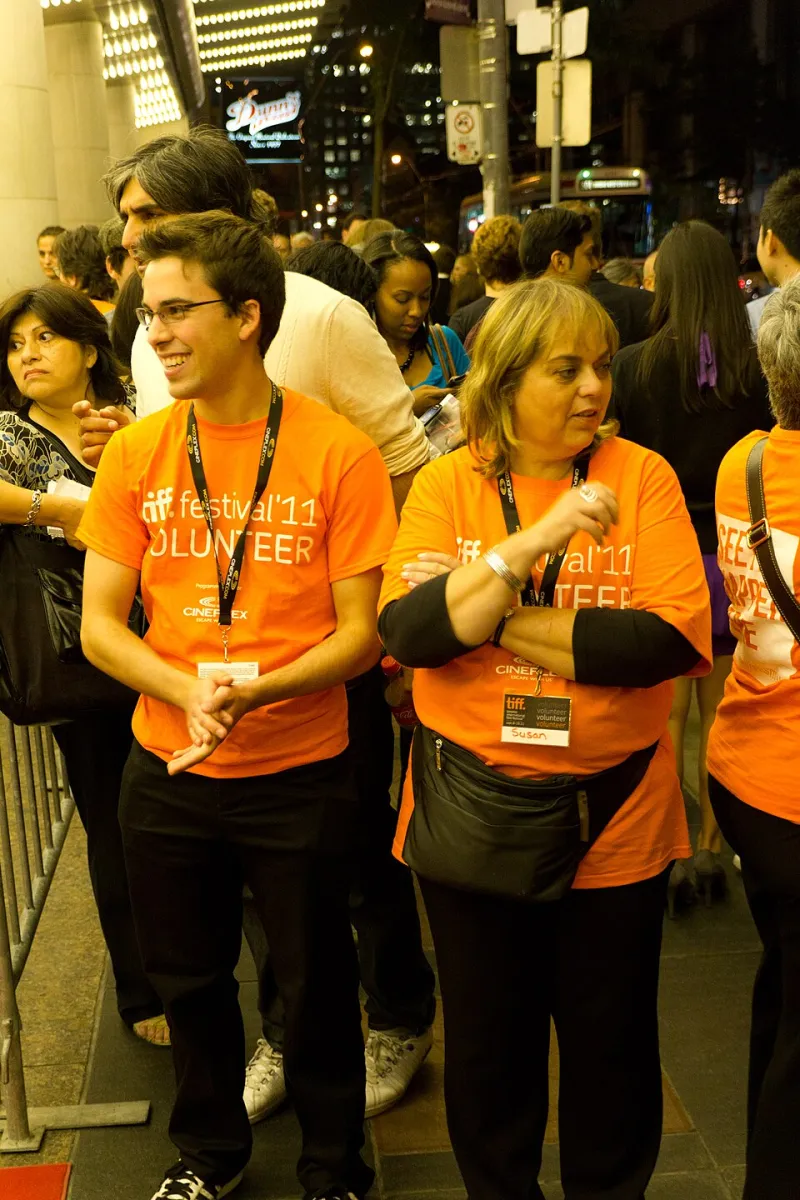
Photo: Tabercil from Canadian, CC BY-SA 2.0, via Wikimedia Commons
The 6am Shift Nobody Films
There's a moment at every festival that never makes the brochure. It's 6.40am, the projector lamp in Screen Two has packed up overnight, a filmmaker's train from Sheffield has been cancelled, and the volunteer coordinator is standing in a car park holding two flapjacks and a set of car keys, asking a complete stranger if they fancy a 90-minute round trip to Nottingham.
The stranger says yes. They always say yes.
That, in miniature, is how Britain's regional film festivals actually run. Not on funding — though a bit of Arts Council money helps — but on the willingness of several hundred people per event to give up their weekends, wear a high-vis tabard over their nice coat, and point lost delegates towards the loo with a smile they genuinely mean.
What's In It For Them?
Ask a volunteer why they do it and you'll rarely get a straight answer first time. There's usually a pause, a shrug, and then something like: "Well, I get to see the films, don't I?"
That's the headline perk, certainly — most festivals offer volunteers free access to screenings around their shifts. But hang around the green room long enough and the real currency reveals itself: community. For film-mad people in towns where the nearest independent cinema might be an hour away, a festival is the one weekend a year they're surrounded by their own tribe.
Take Sarah, a steward at a coastal film festival in the South West (she asked us not to name the event, in case her boss reads it). She signed up four years ago after redundancy left her at a loose end. She's now the person every visiting filmmaker asks for restaurant recommendations, and she's got a showreel of her own short films that she'll happily show you on her phone if you ask twice.
"I've had more doors opened by wearing a lanyard than I ever did sending CVs," she told us, between directing a Q&A queue. "Someone hands you a radio and suddenly you're in the room."
That's the quiet bargain of the festival volunteer economy: labour for access. And unlike most unpaid work in the arts, it often pays off. Festival veterans regularly graduate into paid programming roles, projection jobs, even production careers. The volunteer tent is, functionally, the most effective film school in the country — and it costs the students nothing but their time.
The Arithmetic of Goodwill
Here's the uncomfortable bit, though. The same people who make festivals magical are also what makes them financially precarious.
Most UK regional festivals run on budgets so thin you could read a programme through them. Venue hire, film licensing, travel for guests — the costs have all climbed sharply in the last few years. When a festival faces a shortfall, the temptation is obvious: the volunteer line on the budget is already at zero, so there's nothing left to cut there. The model absorbs inflation because it was never priced in the first place.
Some festivals are starting to reckon with this. A handful of the bigger regional events have introduced travel bursaries for volunteers, hot meals instead of the traditional crisps-and-cordial spread, or agreed expenses for the long car journeys coordinators were previously asking people to fund themselves. Others have moved to a hybrid model, paying a core team of coordinators while keeping volunteer stewards for front-of-house.
Critics of the model — and they exist within the volunteer ranks themselves — argue it's a slippery slope. If a festival can't function without free labour, is it a viable cultural institution or a very well-organised hobby? Defenders counter that festivals aren't businesses in any conventional sense; they're civic events, and asking a community to help put on its own cultural life is no more exploitative than asking volunteers to run a village fete.
Both arguments have merit. Both are also, in a way, beside the point — because the alternative to a volunteer-run festival isn't a paid-run festival. It's no festival.
More Than a Free Tote Bag
Spend a proper weekend at a regional festival and you notice something the London industry rarely sees. The volunteer coordinator isn't just filling a rota; they're running a small, temporary society. People arrive as strangers and leave with group chats, inside jokes and plans to road-trip to next year's event together. Some meet partners. Several, we're told, have named cats after directors they discovered on shift.
There's a serious point underneath the whimsy. In an era when film culture is increasingly something consumed alone, on a phone, at home, festivals are one of the last places where cinema happens together — and the volunteers are the glue. They're not staff; they're the congregation.
So if you're at a regional festival this year and someone in a tabard rescues you from a queue, remembers your name the next day, and tells you which screening is genuinely worth skipping lunch for — maybe buy them a pint. The tote bag's lovely, but it doesn't cover the petrol.
And if you've ever fancied finding out how a festival actually works from the inside? The rota's always got a gap. Bring a coat.