Threading the Future: The Quiet Mission to Keep Britain's Projection Craft Alive
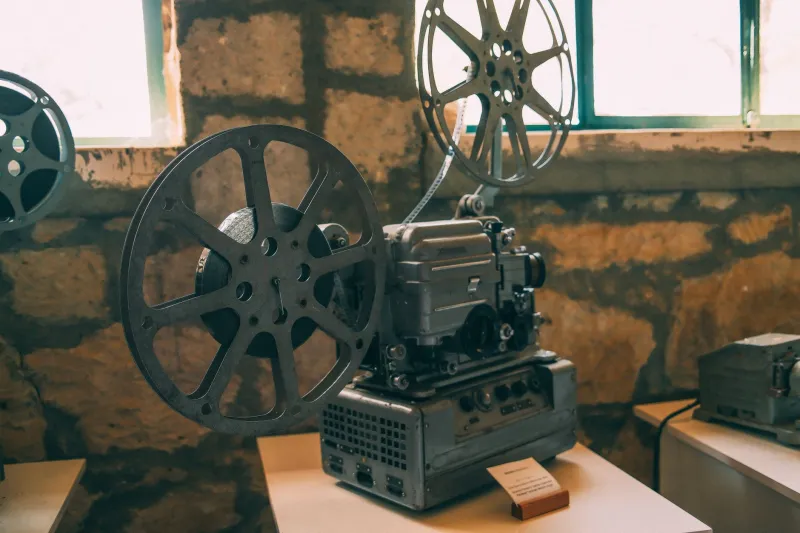
There's a particular kind of silence that settles over a projection booth just before a film starts. The platter hums, the lamp warms, and the person standing at the port window holds something like a conductor's focus — except nobody in the stalls below will ever see them. For decades, that anonymity was simply part of the job. Now, for a shrinking community of projectionists working in Britain's independent cinemas, it's become something closer to urgency.
Because the knowledge stored in those booths — the tactile, intuitive, deeply personal understanding of how celluloid moves through a machine — is disappearing. And a small but determined network of cinemas, film societies, and individual obsessives are doing whatever it takes to make sure it doesn't vanish entirely.
The Last Keepers of the Booth
Martin Gale has been threading projectors since 1987. He started at a multiplex in Coventry, moved through a string of rep cinemas, and has spent the last fourteen years at a small independent in the East Midlands that still runs a 35mm programme twice a month. He can diagnose a bad splice by sound alone. He knows, without checking, exactly how much slack to leave on a reel before it'll cause a jump. He learned all of it from a man called Derek, who learned it from someone before him.
"It was never formal," Martin says. "Derek just let me watch, then let me try, then stood behind me while I made mistakes. That's how it works. You can't read your way into this job."
That oral, hands-on lineage is precisely what's under threat. When digital projectors became the industry standard through the 2010s, the institutional infrastructure for training projectionists effectively collapsed. Film schools don't teach it. There's no apprenticeship levy funding it. The multiplex chains — who once ran their own internal training programmes — have largely automated their projection suites to the point where human intervention is minimal. What remains is patchwork: individual enthusiasts, indie cinemas with a philosophical commitment to film, and the occasional festival that still runs a celluloid strand.
What Actually Gets Taught
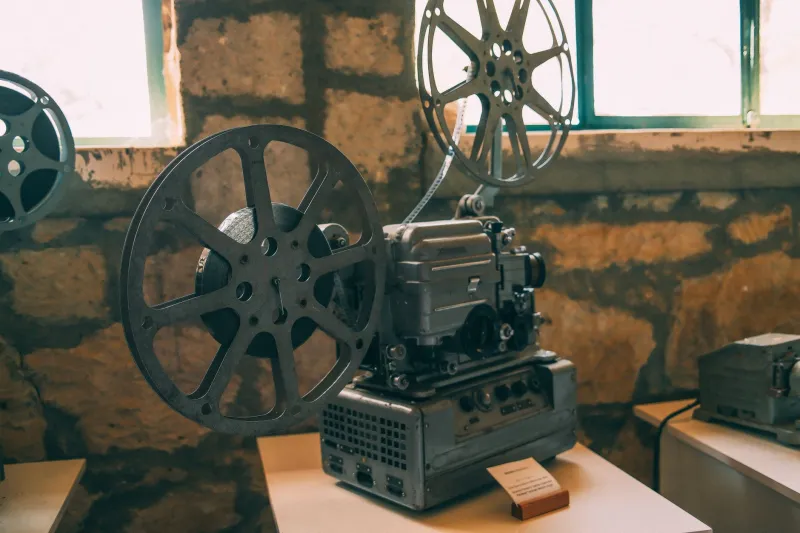
Ask any projectionist what the job involves and you'll get a list that surprises most people. Yes, there's the threading — the specific path a strip of film takes through the gate, past the sound head, around the sprockets. But there's also fault-finding on aging equipment that hasn't been manufactured in thirty years. There's understanding how different film stocks behave under different lamp intensities. There's the chemistry of the booth itself: temperature management, dust control, the particular way a poorly maintained gate will scratch a print that belongs to the BFI and cannot be replaced.
Jade Okafor is twenty-three and has been learning from Martin for the past eighteen months. She came to the cinema as a volunteer, initially just helping with front-of-house on their cult nights. The projection booth was, she says, somewhere she'd never even considered.
"I assumed it was just pressing play, honestly. Then Martin showed me the platter system and I was completely gone. It's mechanical in this beautiful, almost clockwork way. Every film is slightly different — the print has its own personality."
That language — prints with personalities — comes up repeatedly when you talk to projectionists. It's the kind of thing that sounds whimsical until you've watched someone hold a strip of 35mm up to a light and immediately identify where in its life the film has been, what conditions it's survived, and how it needs to be handled now.
The Informal Network Holding It Together
There's no official body coordinating this knowledge transfer. What exists instead is a loose, largely self-organised network of cinemas and individuals who share information, loan equipment, and occasionally host informal training days. The Film Hub networks — part of the BFI's wider UK-wide infrastructure — have helped facilitate some of this, running technical workshops and connecting venues. But much of it happens through personal relationships: a projectionist at a Glasgow arts cinema ringing a colleague in Bristol to troubleshoot a Kinoton motor issue; a retired technician driving to a village hall screening to help a film society get their archive print running correctly.
Some cinemas have formalised this slightly. The Dukes in Lancaster, the Hyde Park Picture House in Leeds, and the Tyneside Cinema in Newcastle are among those with established commitments to running celluloid and bringing younger staff into the technical side. Others manage it more quietly — a senior projectionist who simply refuses to be the last person who knows how to do this.
"I think about it like a craft guild, except without the guild," says Priya Mehta, who manages programming at a festival cinema in the North West and has been actively recruiting trainees to work their 35mm weekend strands. "The knowledge has always been passed person to person. We just need to be more deliberate about making sure there are enough people to pass it to."
More Than Nostalgia
It would be easy — and wrong — to frame all of this as pure nostalgia. The argument for keeping projection skills alive isn't simply that film looks beautiful (though it does). It's that a significant portion of cinema history only exists on celluloid, and showing it correctly requires people who understand the format. Archive prints of cult films, rare documentaries, locally significant features — these aren't going to be digitised any time soon, and some of them never will be. If the ability to project them correctly disappears, those films effectively become inaccessible, locked in canisters that no one knows how to open properly.
There's also something to be said for what the craft does to the people who learn it. Jade talks about the shift in how she watches films now — the awareness of what's happening in the booth, the relationship between the image and the machine producing it. Martin describes new trainees developing what he calls "patience with the physical," a quality he thinks is increasingly rare and genuinely valuable.
"We live in a world where everything's instant and nothing has weight," he says. "Film has weight. It has temperature. It breaks. Learning to work with it teaches you something about care."
Getting Involved
If you're curious about projection, the best route in remains the one it's always been: find your nearest independent cinema that still runs film and ask if you can see the booth. Most projectionists, in the authors' experience, are constitutionally incapable of turning down that request. The BFI Film Audience Network is also worth contacting for information on technical training opportunities, and the Cinema Museum in London occasionally runs hands-on sessions for those wanting a starting point.
The knowledge is still there. It's just waiting to be threaded through to the next pair of hands.