Pulling Up Sticks: The Independent Cinemas Abandoning the High Street for Britain's Forgotten Places
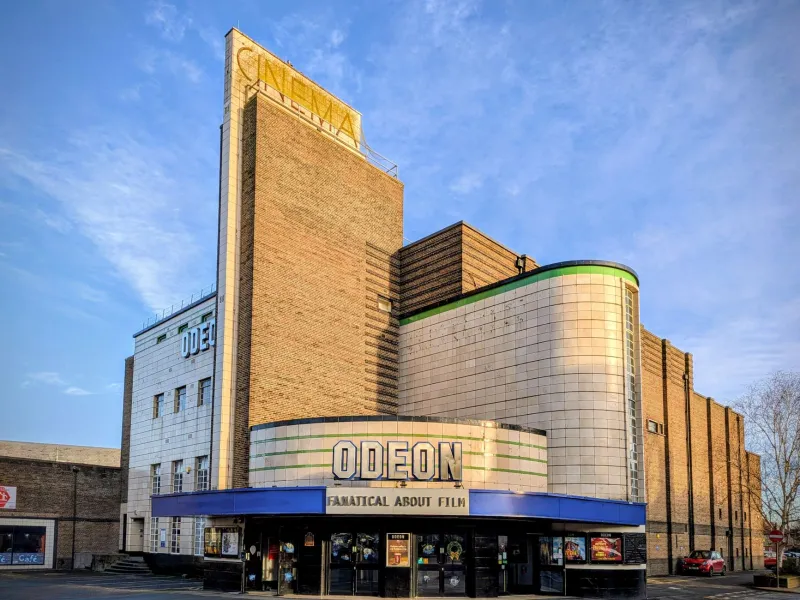
There's a particular kind of thrill that comes with discovering a genuinely great cinema in a place you'd never thought to look. Not tucked behind a Wetherspoons in a city centre you already know, but sitting in the middle of a former mill town, or nestled at the end of a coastal road where the sat-nav gives up and shrugs. That thrill — the away-day electricity of it — is becoming less accidental and more deliberate. Britain's indie cinema scene is on the move, and it's heading somewhere surprising.
Over the last several years, a quiet but meaningful pattern has emerged. Independent cinemas, ground down by soaring urban rents, dwindling footfall and the relentless pressure of competing with multiplexes and streaming platforms, have started to close their traditional doors. But a growing number of them aren't disappearing entirely. They're relocating — to post-industrial towns, rural market communities, coastal settlements and ex-mining villages that haven't had a working cinema in decades, if ever.
The Economics of Escape
The maths, when you look at it plainly, aren't complicated. A mid-sized independent cinema operating in, say, a gentrifying area of Leeds or Bristol is fighting expensive battles on multiple fronts simultaneously. Rent negotiations with landlords who've spotted the neighbourhood's rising value. Competition from the Odeon three streets over running the same blockbuster at half-past seven. A customer base that, however loyal, is being constantly seduced by the sofa.
Compare that to a converted textile mill in Hebden Bridge, or a repurposed co-op hall in a Shropshire market town. The lease is manageable. The building has character baked into its bones. And crucially, there is no competition — because there's no cinema for thirty miles in any direction.
This isn't naivety. Operators who've made the leap describe it as calculated risk that actually feels less risky than staying put. When your audience has to actively choose to come to you — when a trip to the cinema genuinely is an away day — you attract a different kind of commitment. People book in advance. They come in groups. They stay for a drink afterwards. The transactional relationship that defines multiplex visits gives way to something that feels more like community membership.
The Places Saying Yes
What's striking is how receptive these so-called unlikely towns have been. Local councils in areas with high cultural deprivation indices — a dry bureaucratic phrase that essentially means places that have been systematically ignored — have in several cases actively courted incoming cinema operators. Heritage buildings that have sat empty and decaying for years suddenly have a purpose. The cinema becomes an anchor.
In former steel and mining communities across South Yorkshire and the South Wales valleys, the arrival of an independent screen has in some cases catalysed wider regeneration conversations. Not in the glossy, developer-driven sense, but in the more organic way that happens when a community suddenly has somewhere to gather around something good. Film clubs form. Schools arrange trips. People who haven't been to the cinema in fifteen years start going regularly, partly because it's local, and partly because what's being shown isn't what they'd find at the nearest Cineworld.
That programming distinction matters enormously. The cinemas making these moves tend to be the ones with a genuine curatorial identity — venues that built their reputations on showing things the mainstream wouldn't touch. When they arrive in a town that's been culturally overlooked, they don't water that identity down. They bring it wholesale. And audiences, it turns out, are hungry for it.
Not Without Its Complications
It would be dishonest to present this as a straightforward success story across the board. Relocation is genuinely hard, and not every venue that's attempted it has thrived. Audiences in underserved communities can take time to build. Programming instincts calibrated for urban arts crowds don't always translate immediately. Some operators have found themselves recalibrating — not abandoning their identity, but learning to introduce it more gradually, more conversationally.
There's also the question of who gets displaced in the process. When a cinema closes its city-centre doors, the community it leaves behind loses something too. The regulars who built their social lives around Tuesday-night screenings, the film students who relied on it for access to repertory programming, the older audience members for whom travel to a new location simply isn't viable — these losses are real and shouldn't be romanticised away.
The most thoughtful operators acknowledge this tension openly. Some have maintained satellite programming in their former locations, partnering with arts centres or pub venues to keep a presence. Others have invested heavily in transport partnerships — subsidised minibus runs from nearby towns, tie-ins with rail operators — to make the journey part of the appeal rather than a barrier.
The Away-Day Effect, Engineered
What's genuinely interesting, from a cultural standpoint, is how this geographical shift is redefining what a cinema visit means. The venues driving this trend are, in a sense, leaning into the logic that's always defined the best independent cinema experiences: that the effort of getting somewhere adds to the meaning of what you find there.
A screening of a restored 70s British folk horror in a converted chapel in rural Powys hits differently than the same film in a city-centre arts cinema. The journey — the drive through dark countryside, the arrival at somewhere unexpected, the shared strangeness of the experience — becomes inseparable from the film itself. It's the kind of thing you talk about for weeks.
This isn't accidental. Operators who've relocated to unexpected places talk about leaning into their geography as a programming and marketing tool. The location becomes part of the identity. The inconvenience — if you can even call it that — becomes a selling point for exactly the kind of audience these cinemas want to cultivate.
Where This Goes Next
It's too early to call this a movement in any fully formed sense. But the trajectory is clear enough to pay attention to. As urban property costs continue to squeeze independent operators, and as streaming continues to erode casual multiplex attendance, the calculus of staying put in a city centre is getting harder to defend.
The towns on the receiving end of this migration — the ones that said yes to a cinema that nobody else wanted — are, in many cases, discovering something they didn't know they were missing. And the audiences making the trip out to find these venues are getting something the algorithm will never be able to replicate: the specific, irreplaceable pleasure of going somewhere you didn't expect to love, and finding exactly what you needed.
Sometimes the best cinema is the one that made you work to get there.