Anorak Auteurs: The UK Film Clubs Deliberately Engineering Tomorrow's Cult Classics
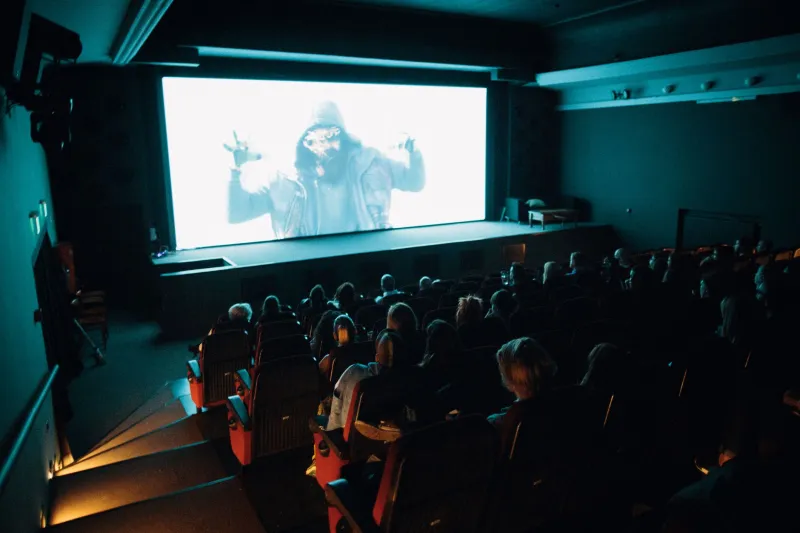
There's a particular kind of magic that happens when a film nobody's heard of lands in a room full of people who weren't expecting it. The murmur that ripples through the audience after an unexpected scene. The way strangers catch each other's eye in the dark. The conversation that spills out onto the pavement afterwards and doesn't stop until someone's missed their last bus home.
For most of cinema history, cult status has been something that happened to a film — a slow, organic accumulation of obsessive devotion, usually years after a theatrical flop or a distributor's indifference. But a growing network of grassroots screening collectives across the UK is quietly challenging that assumption. These aren't passive archivists. They're active architects, curating films with a deliberate eye on what could become culturally significant, and building the communal rituals to make it stick.
The Curatorial Instinct
Meet Priya, who runs a monthly screening night out of a railway arch in Sheffield that she'd rather we didn't name directly. "We get about sixty people a month," she says, nursing a pint between two enormous speaker stacks that double as seating when the folding chairs run out. "But it's not about numbers. It's about picking films that feel like they're sitting on the edge of something. Films that haven't found their audience yet."
Priya's approach is deliberately counter-intuitive. She avoids anything with existing cult credentials — no The Room, no Rocky Horror, no Withnail and I. "Those films have already done the work," she explains. "We're interested in what hasn't been discovered yet. Films that are weird or difficult or just slightly broken in ways that feel meaningful."
Her recent programming has included a 2003 Finnish horror-comedy that had never been screened publicly in the UK, a Portuguese road movie with no subtitles that the audience somehow followed anyway, and a digitally restored print of a 1987 British thriller so obscure that the director — who turned up unannounced after someone tipped him off on social media — wept openly during the Q&A.
"That's when you know you've done something," Priya says. "When the film finds its people for the first time."
Ritual as the Real Product
Down in Bristol, a collective called Loose Frame have taken the engineering of cult status even further. Their screenings come with a pre-show ritual: audience members are handed a single index card as they arrive and asked to write one word — any word — before the film begins. The cards are collected, shuffled, and read aloud after the credits roll. Nobody quite knows why. That's partly the point.
"Cult films aren't just films," says Marcus, one of Loose Frame's three co-organisers. "They're experiences that people feel ownership over. We're trying to create the conditions for that ownership from the very first screening."
It's a surprisingly sophisticated piece of cultural engineering dressed up in lo-fi clothing. The index card ritual costs nothing, takes thirty seconds, and has become so associated with Loose Frame's screenings that attendees talk about it in almost reverential terms online. The films themselves — often sourced from international festival programmes, obscure streaming catalogues, or direct relationships with emerging directors — are almost secondary to the atmosphere Marcus and his collaborators have built around them.
Not everyone's comfortable with that framing. "Aren't you just manufacturing authenticity?" I ask. Marcus shrugs. "Every cult film ever made was 'manufactured' in some sense. We're just honest about the process."
The Ripple Effect
What's genuinely surprising is how often these grassroots programmers seem to be ahead of the curve. Priya points to three films she screened in the past two years that subsequently picked up distribution deals, one of which is now streaming on a major platform. Loose Frame hosted what they believe was the first UK public screening of a film that later won a BAFTA nomination. Neither collective takes credit loudly — that's not really the culture — but the pattern is hard to ignore.
In Glasgow, a loose group of film enthusiasts who meet under the banner of Slow Burn Cinema have developed something of a reputation among independent distributors as an early indicator of which niche titles might have legs. "We've had people from distribution companies come to our screenings," admits Callum, who helps run the group. "They don't announce themselves. But you can tell."
Slow Burn's approach is rooted in duration and patience rather than spectacle. They favour long films — rarely anything under two hours, often significantly more — and actively discourage phones, talking, and what Callum diplomatically calls "ironic viewing." "We're not interested in people laughing at something," he says. "We want genuine engagement. That's where real cult status comes from — people who actually care, not people who think it's funny to care."
Building the Congregation
All three collectives share one thing in common beyond their programming instincts: they've built genuine communities. Not just mailing lists or social media followings, but groups of people who know each other, who argue about films, who travel significant distances for a single screening and consider it absolutely worth it.
This is, arguably, the actual product these collectives are selling. The films are the occasion. The community is the point.
"We had someone drive from Norwich last month," says Priya. "For a film she'd never heard of, by a director she couldn't have named. She came because she trusted us. That's not something you can manufacture overnight."
That trust is built slowly, through consistent curation, through the willingness to occasionally screen something that doesn't quite work, and through the genuine enthusiasm of the people doing the programming. None of these collectives are driven by profit — most barely break even on door takings — and that disinterestedness is precisely what makes audiences trust their taste.
Why It Matters
In a cinematic landscape increasingly dominated by algorithm-driven recommendations and franchise tentpoles, these collectives represent something genuinely countercultural: the idea that cinema's future might be shaped not by data or marketing budgets, but by a few dozen people in a draughty room in Sheffield who just watched something extraordinary and can't stop talking about it.
Cult classics have always been made by audiences as much as filmmakers. What's changed is that some of those audiences are now showing up with a plan.
And if you want to know which films will matter in ten years' time, you could do a lot worse than following the index cards.