Splicing It Together: How Britain's Indie Cinemas Became Accidental Film Schools
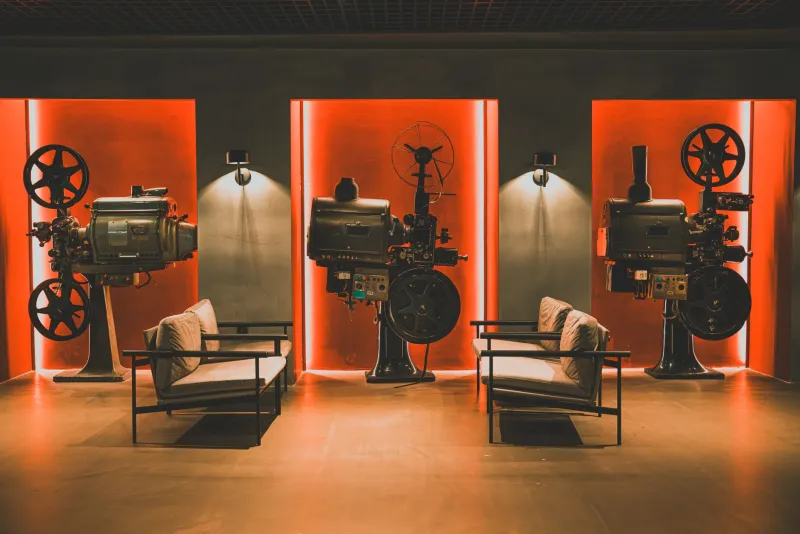
There's a particular smell to a projection booth. Warm electronics, old lubricant, something faintly metallic that you can't quite place. It's not glamorous. There's rarely enough room to swing a reel, let alone swing a cat, and the hours are long, the pay is modest, and the job title — if you're lucky enough to have one — doesn't exactly set pulses racing at dinner parties. But ask anyone who's spent serious time up there behind the porthole glass, and they'll tell you it's one of the best educations in cinema you can possibly get.
Across Britain, a quiet but genuinely significant shift is happening. Independent cinemas — already stretched thin, already doing the work of three institutions at once — are taking on apprentices. Not through formal schemes, not via Arts Council-approved frameworks (though sometimes that too), but through something older and more instinctive: the passing of knowledge from one person who cares deeply to another who cares just as much.
Learning by Doing, Not by Degree
The economics of a film degree are well-documented and frequently brutal. Tuition fees, living costs, three years of your life — and at the end of it, a qualification that may or may not translate into actual employment in an industry that increasingly values contacts and credits over credentials. It's not a system that works for everyone, and a growing number of young people who genuinely love cinema are looking for a different route in.
What they're finding, in some cases, is that the route runs directly through the back door of their local indie cinema.
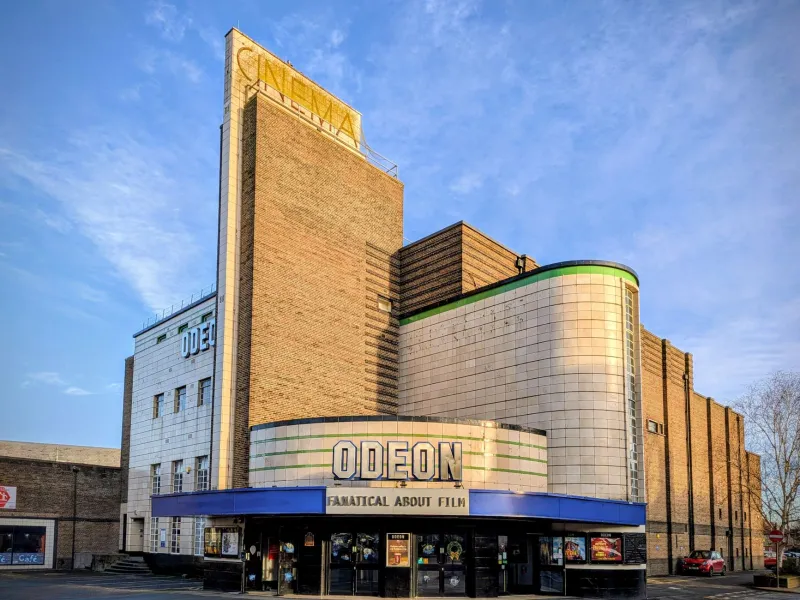
At venues like the Hyde Park Picture House in Leeds, the Watershed in Bristol, and smaller community-run spaces dotted across market towns and post-industrial cities, experienced projectionists and programmers are taking on informal apprentices — people who started as volunteers or part-time front-of-house staff and gradually drifted upstairs, drawn by curiosity and an increasingly obvious aptitude for the technical side of things.
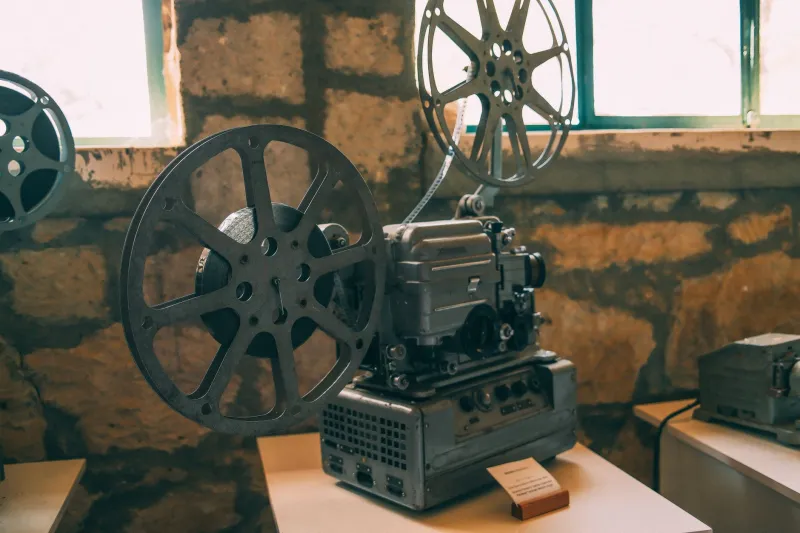
The training they receive is hands-on in a way that no university module can replicate. They learn to thread a 35mm projector not by watching a YouTube tutorial but by doing it wrong, being corrected, doing it again. They learn what a print sounds like when something's about to go wrong. They develop an instinct for the image — for when the focus has drifted a fraction, when the lamp is running hot, when the sound mix isn't sitting right in the room.
The Knowledge That Doesn't Live in Textbooks
There's a category of expertise that simply cannot be codified. It lives in the hands of people who've spent decades doing a thing, and it transfers — if it transfers at all — through proximity, patience, and repetition. Cinema projection is full of this kind of knowledge.
Take film restoration. Not the digital kind, where software does the heavy lifting, but the physical work of assessing a damaged print, cleaning it, repairing splices, deciding what can be salvaged and what can't. This is knowledge that exists in a shrinking pool of people, many of whom are now well into their sixties or beyond. When they go, it goes with them — unless someone has been standing beside them, learning.
Several indie venues have quietly made it their business to ensure that doesn't happen. Programmers who've spent thirty years developing an instinct for what an audience wants — not what the algorithm says they want, but what will actually move a room of real people on a wet Tuesday in February — are sitting down with younger colleagues and trying to articulate something that resists articulation. It's slow work. It's also essential.
Curation as Craft
Projection is only part of what's being taught. The other half — arguably the more complex half — is programming. How do you build a season? How do you sequence a double bill so that the second film lands differently because of what came before it? How do you read an audience, adapt to a community, take a risk on something unfamiliar without losing the regulars who keep the lights on?
These are not questions with clean answers, and the people best placed to explore them are the ones who've made the mistakes already. Experienced programmers at indie venues are increasingly mentoring younger staff through the decision-making process — not dictating choices, but walking through the reasoning, sharing the context, explaining why a particular film was scheduled in a particular slot in a particular month.
The result, at its best, is a kind of curatorial apprenticeship. The apprentice doesn't just learn what to screen — they learn how to think about screening. They develop a philosophy, a sensibility, a point of view. Which is, when you get down to it, exactly what the best independent cinemas have always had.
The Venues Doing It Properly
Some venues have formalised this a little more than others. The Broadway in Nottingham has long had a reputation for developing staff into programmers. The Dukes in Lancaster has a history of nurturing technical expertise from within. Smaller, volunteer-run spaces — the kind that operate out of village halls or converted warehouses — often have no choice but to train people from scratch, because there's nobody else.
What's interesting is how rarely this gets talked about as the genuinely significant thing it is. These venues aren't just showing films. They're preserving a body of knowledge and practice that has no obvious institutional home. Film schools teach screenwriting and directing and producing. They don't, for the most part, teach you how to nurse a 1970s Kalee projector through a Saturday night double bill or how to build a cult following for Romanian new wave cinema in a former mill town.
The indie cinema circuit is doing that. Quietly, without fanfare, with very little funding and a great deal of collective stubbornness.
What Comes Next
The apprentices themselves are an interesting cohort. They tend to be people who found their way into cinema not through any conventional path but through a genuine, sometimes obsessive love of film. They came in to tear tickets or run the bar and found themselves unable to leave. They're exactly the kind of people the industry needs — and exactly the kind of people a formal education system often fails to catch.
Whether this informal network of training can scale, or sustain itself as the venues themselves face ongoing financial pressure, is an open question. What's clear is that something valuable is happening in those cramped booths and cluttered programming offices. Knowledge is moving. Skills are being transferred. The next generation of cinema guardians is being quietly, painstakingly assembled.
And it's happening not in a lecture theatre, but in the dark, with a film running and someone patient enough to explain why it matters.