Reel Detectives: Meet the People Dragging Forgotten British Cinema Back from the Brink
Photo: Adam Cuerden, Public domain, via Wikimedia Commons
Before a film can have a second life, someone has to find it. That sounds obvious until you realise how many British films — made with genuine craft and intention, screened briefly, then abandoned by distributors or buried under the weight of licensing complications — have simply ceased to exist in any accessible form. Not lost, exactly. But not found either.
The people who go looking for them occupy a peculiar corner of British film culture. Part archivist, part detective, part evangelist, they spend their time in storage facilities, correspondence chains, and occasionally someone's actual attic, pursuing prints and negatives that the industry long ago stopped caring about. When they succeed, the results end up at independent cinemas and film festivals across the country — and audiences get to watch something that, in many cases, no living person has seen projected in decades.
The Scale of What's Missing
The British Film Institute estimates that a significant proportion of films made before 1950 are either lost or survive only in incomplete form. But the problem doesn't stop with the early silent era. The 1970s and 1980s produced waves of low-budget British genre cinema — horror, comedy, social realism, experimental work — that was never properly archived, was distributed on formats that degrade badly, and has fallen into a legal grey area where nobody is quite sure who owns what.
This isn't an abstract heritage concern. These are films that shaped the tastes of programmers, directors, and audiences who are still working today. When they disappear, something specific is lost: a record of how British cinema talked to itself during particular moments of social and political upheaval, told through the lens of people who were often working outside the mainstream precisely because mainstream British cinema wasn't telling their stories.
The Hunt
Susan Hale has been programming for a film society in the north of England for eleven years. In that time, she's tracked down prints for films that hadn't been screened publicly since their original theatrical run, negotiated with estates over rights for works whose directors died without clear succession arrangements, and once spent four months corresponding with a retired projectionist in Wolverhampton who turned out to have a near-perfect 35mm print of a 1982 British horror film that everyone assumed had been destroyed in a warehouse fire.
"Most of it is just persistence," she says. "People assume there's some central database you consult. There isn't. You follow leads. You email people who email other people. You turn up at events and ask questions. A lot of the time you hit dead ends. But occasionally you find something that genuinely makes you feel like you've dug up buried treasure."
The BFI National Archive, the North West Film Archive, and the various regional collections maintained by universities and independent organisations are the formal infrastructure of this world. But a surprising amount of material still exists in private hands — with collectors, former crew members, regional cinema operators who never got round to returning the prints they were lent.
Restoration: The Science and the Compromise
Finding a print is only the beginning. The condition of surviving film materials ranges from pristine to actively dangerous — nitrate film stock from the early decades is notoriously flammable, and even more recent acetate materials are subject to vinegar syndrome, a form of degradation that produces a distinctive smell and causes the film to shrink, warp, and eventually become unplayable.
Digital restoration has transformed what's possible. Labs working with the BFI and independent restoration houses can now recover legible images from materials that would previously have been considered beyond saving — using frame-by-frame scanning, algorithmic noise reduction, and painstaking manual work to reconstruct what the original image should look like.
But restoration always involves interpretation. When a colour film has faded unevenly, someone has to make a decision about what the original palette was intended to be. When frames are missing, the restorer has to decide whether to leave the gap visible or attempt a reconstruction. These aren't purely technical choices. They're editorial ones, and the best practitioners are scrupulous about documenting every decision they make so that future archivists know what they're working with.
The London-based restoration lab Fixafilm UK has worked on several projects bringing obscure British titles back to a screenable condition. Their work on a mid-1970s British social drama — a film that had been out of circulation since a brief theatrical run in 1977 — took eighteen months and involved reconstructing approximately twelve per cent of the footage from inferior alternative elements. The restored version premiered at a regional film festival last year to an audience that included the film's now-elderly director, who had never expected to see it projected again.
What Gets Screened, and Where
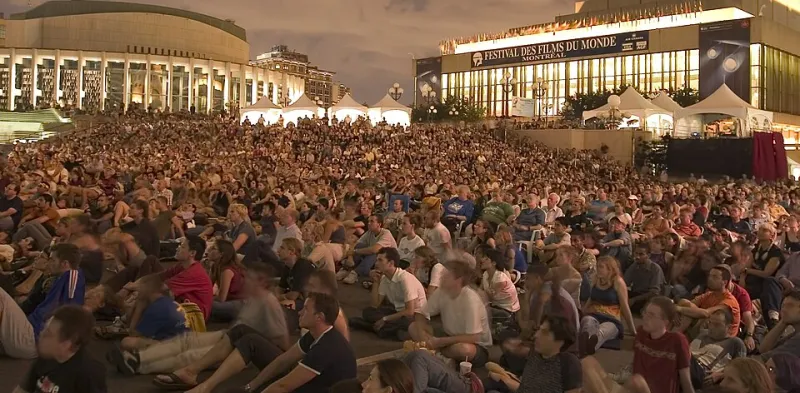
The independent cinema and festival circuit is where this work becomes visible to audiences. Events like the Bradford International Film Festival, the Glasgow Film Festival, and a growing number of regionally organised archive screening programmes have built dedicated strands for restored and rediscovered British work. The BFI's own touring programme, Filmmaking on the Margins, has brought restored prints of overlooked British titles to venues that would never otherwise have access to them.
For independent programmers, a genuine rediscovery is a significant event. It generates press interest, attracts audiences who wouldn't normally come to an archive screening, and creates exactly the kind of communal experience — watching something rare and important, together, in a room — that defines what independent cinema is for.
The challenge is that restoration is expensive, rights situations are often unresolved, and the funding landscape for archival work is perpetually precarious. Many projects that could be undertaken aren't, simply because the resources don't exist and the commercial case is too marginal to attract private investment.
The Digital Question
Streaming has complicated the picture in ways that are still being worked out. On one hand, digital distribution makes it possible to reach audiences who would never travel to a specialist screening. Several restored British titles that received limited theatrical runs have found substantial audiences online, introducing films to viewers who had no idea they existed.
On the other hand, the economics of streaming are brutal for niche archival material. Licensing deals tend to be short-term, catalogue titles disappear from platforms without notice, and the discoverability problem — how do you find a film you don't know to look for? — is arguably worse on a streaming platform than in a well-programmed independent cinema where someone has made a curatorial choice on your behalf.
The archivists and programmers doing this work are largely united in believing that the cinema screening remains the most meaningful way to encounter a rediscovered film. Not because streaming doesn't matter, but because there's something about watching a restored print in a room with other people — knowing that this film nearly didn't survive, that someone worked for months to make this possible, that you're part of a small group who are seeing it properly for perhaps the first time in decades — that no home viewing experience can replicate.
The reels keep turning. The search continues.