From Festival Tent to Cult Throne: How Britain's Film Festivals Keep Launching Tomorrow's Classics
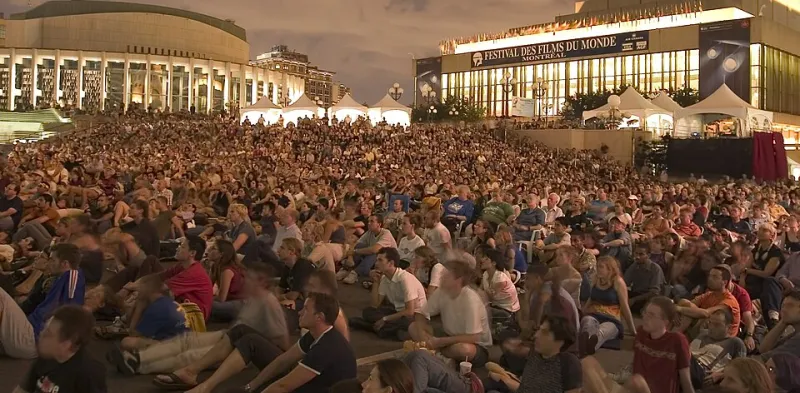
Photo: DanCauWiki, CC0, via Wikimedia Commons
Cult films don't emerge from marketing campaigns. They're not manufactured by committees or stress-tested in focus groups. They grow — slowly, stubbornly, often against all commercial logic — from the passionate advocacy of people who saw something extraordinary before anyone told them to.
And in Britain, more often than not, that process begins at a film festival.
From Sheffield's documentary powerhouse to the gothic pleasures of Abertoir in Aberystwyth, from the quietly radical programming of Cambridge Film Festival to the deliberately unruly spirit of Frightfest, the UK festival circuit has spent decades doing something the mainstream film industry either can't or won't: taking genuine risks on films that defy easy categorisation.
The results speak for themselves.
The Festival-to-Cult Pipeline Is Real
Cast your mind back to the early screenings of films that are now considered essential viewing. Many of them passed through British festivals before finding their audiences. Under the Skin played to baffled and electrified crowds at festivals before critical consensus slowly assembled around it. Saint Maud — now firmly embedded in the British horror canon — was a festival darling long before its theatrical release brought it to wider attention. Possessor, Brandon Cronenberg's viscerally unsettling body horror, found its first passionate UK advocates on the festival circuit before becoming the kind of film people press on strangers.
This pattern isn't accidental. It reflects something structural about how festivals operate — and why the UK circuit is particularly well-suited to incubating cult cinema.
"Festivals create permission," explains one programmer who has worked across multiple UK events over the past decade. "When you're at a festival, the context tells you that what you're about to watch might be strange, challenging, or unlike anything you've seen. That primes audiences to engage rather than resist. The same film in a multiplex on a Tuesday night might get walked out on. At a festival, it gets a standing ovation."
Sheffield DocFest and the Documentary Cult
It would be a mistake to think of cult cinema as exclusively the domain of horror and genre film. Documentary has its own cult canon, and Sheffield DocFest — one of the largest documentary festivals in the world — has been central to building it.
Films like Searching for the Wrong-Eyed Jesus, The Act of Killing, and more recently Roadrunner: A Film About Anthony Bourdain all had significant Sheffield moments that shaped how British audiences received them. The festival has a particular gift for finding documentaries that function less as journalism and more as genuinely cinematic experiences — films that reward rewatching, that generate obsessive fan communities, that people quote and reference years after first seeing them.
"Documentary can absolutely be cult," says a Sheffield-based film critic who has attended the festival for fifteen years. "The films that achieve that status tend to be the ones that do something formally interesting — that don't just tell you a story but make you question how stories get told. Sheffield finds those films."
The Smaller Festivals Are Where the Real Discoveries Happen
For all the prestige of Edinburgh or the scale of BFI London, it's often the smaller, more specialist festivals that function as the truest early-warning systems for future cult classics.
Abertoir, the Welsh horror festival held annually in Aberystwyth, has built a devoted following precisely because its programming is so uncompromisingly specific. It doesn't try to appeal to casual audiences. It speaks directly to people who love horror cinema with an almost scholarly intensity — and those people, in turn, become the evangelists who spread word of what they've seen.
Similarly, Grimmfest in Manchester has consistently programmed films two or three years before they achieved wider recognition. The festival's programmers have an almost uncanny ability to identify which genre films will endure, which directors are operating at a genuinely elevated level, and which films are going to matter.
"We're not programming for now," one Grimmfest programmer has said. "We're programming for five years from now."
That long-term thinking is precisely what cult cinema requires.
Five Festival Films from the Past Five Years with Serious Cult Potential
For anyone wanting to get ahead of the curve, here's our shortlist of films that made significant impressions on the UK festival circuit and carry the hallmarks of future cult status:
1. Enys Men (2022) — Mark Jenkin's follow-up to Bait played festivals before its theatrical release and divided audiences sharply. That division is almost always a good sign. Its hypnotic, unsettling atmosphere rewards multiple viewings in a way that straightforwardly likeable films rarely do.
2. The Innocents (2021) — This Norwegian film about children with supernatural abilities toured UK festivals to gasps and uncomfortable silences. It's the kind of film that gets under your skin and stays there.
3. Flux Gourmet (2022) — Peter Strickland's latest absurdist provocation played to devoted crowds who already understood his register, but also converted new fans who encountered it festival-first. It's strange in precisely the way cult films need to be.
4. Leonora Addio (2022) — Paolo Taviani's final film is formally adventurous in ways that challenge easy consumption. Festival audiences who gave it their full attention were rewarded with something genuinely extraordinary.
5. Rye Lane (2023) — A British film that could easily have been dismissed as a rom-com but which festival programmers correctly identified as something more formally interesting and culturally specific. Its festival circuit run helped establish the critical vocabulary audiences needed to appreciate it properly.
What Festival Programmers Actually Look For
We asked several programmers — anonymously, because they were refreshingly candid — what qualities they associate with films that go on to achieve cult status.
The answers clustered around a few consistent themes. Films that provoke strong disagreement. Films with a distinctive visual or sonic identity that can't be easily replicated. Films that seem to exist slightly outside the current moment — either ahead of it or operating according to their own internal logic. Films that reward the kind of engaged, attentive watching that festival audiences tend to bring.
"The worst thing a film can be at a festival is fine," one programmer told us. "Fine films get polite applause and are forgotten by dinner. The films that matter are the ones that cause arguments in the bar afterwards."
Why the Away Day Matters Here
All of this connects back to something fundamental about what festivals offer that ordinary theatrical releases don't: the concentrated, communal experience of watching films with people who have specifically chosen to be there.
When you travel to a festival — when you make the away day of it — you're investing in the experience before you've even seen a frame. That investment changes how you watch. It opens you up. And it means that when something genuinely extraordinary happens on screen, you're in the best possible state to receive it.
The cult classics of the future are being screened right now, in tents and converted theatres and university lecture halls across Britain. The question is whether you're going to be in the room.
We'd suggest making the journey.