No Distributor, No Problem? How Britain's Grassroots Screens Are Rewriting the Rules for Indie Film
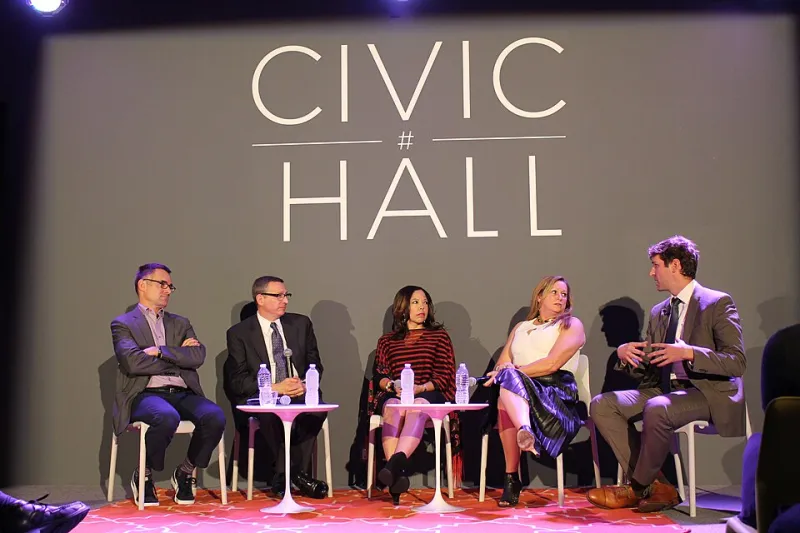
Photo: New America, CC BY 2.0, via Wikimedia Commons
Let's be honest about something. The British independent film sector has a dirty little secret, and it's not about budgets or talent. It's about what happens after the credits roll at a festival premiere. A film gets made. It gets shown. People who work in the industry applaud. And then, more often than not, it quietly disappears.
This isn't a new problem. But it's getting harder to ignore.
The Distribution Gap Nobody Talks About Loudly
For every British indie that breaks through — your Aftersun, your Saint Maud, your Rocks — there are dozens that complete the festival circuit, collect a handful of four-star reviews from publications with dwindling readerships, and then land on a streaming platform with a marketing budget of approximately nothing. The algorithm buries them. The audiences never come.
The structural reasons for this are well-documented if rarely discussed in public. UK distribution is heavily concentrated. A small number of companies control most theatrical access, and they're understandably cautious about committing resources to films without pre-existing audience recognition. The economics of theatrical release — prints, advertising, the complexity of booking screens — make it genuinely difficult to justify for films without a bankable name attached.
"There's a tier of really significant British filmmaking that simply can't get a traditional release," says one London-based producer who asked not to be named. "Not because the films aren't good enough. Because the infrastructure doesn't exist to support them."
What does exist, increasingly, is something else entirely.
The Grassroots Alternative: Community Halls, Church Basements, and Front Rooms
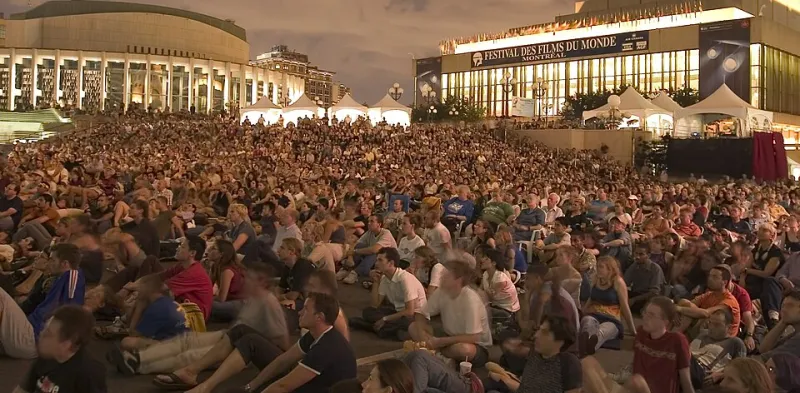
Across Britain, a loose but expanding network of community-run screening initiatives is doing something the mainstream distribution system can't or won't: meeting audiences where they actually are.
In Glasgow, Take One Action has spent years building audiences for socially engaged documentary through a model that combines screenings with discussion, activism, and community organising. In Bristol, the Cube Microplex operates as a co-operative, with no formal hierarchy and a programming policy that explicitly prioritises work that wouldn't survive a traditional release. In rural Shropshire, a film club that started in a village hall during lockdown now draws audiences from three counties for monthly screenings of films that haven't had a UK theatrical release at all.
These aren't marginal operations. They're filling a structural gap that the mainstream industry has created through its own risk-aversion.
Mara Okafor, who runs a pop-up screening collective in East Manchester, describes the model with characteristic directness: "We don't wait for permission. We find the film, we find the room, we find the audience. Sometimes it works perfectly and sometimes it's a disaster, but at least people have seen something they wouldn't have seen otherwise."
Her collective has screened films from Nigeria, from Colombia, from South Korea — films that will never appear in an Odeon, that may never appear on a British streaming platform. They've also screened British films that got distribution deals so small they might as well not have existed.
Direct-to-Audience: Liberation or Limitation?
The optimistic reading of all this is genuinely exciting. If you can bypass traditional distribution entirely — licensing directly from filmmakers, using platforms like MUBI or Eventive for ticketing, building audiences through social media and community networks — then the gatekeepers become irrelevant. The film finds its people.
But there's a more uncomfortable question lurking underneath the success stories. Who, exactly, are these audiences?
Community screening initiatives tend to flourish in cities, in university towns, in places with existing cultural infrastructure and populations accustomed to seeking out alternative entertainment. They're often — though not always — serving audiences who are already engaged with independent cinema, who already have the cultural confidence to show up to a screening in an unfamiliar venue.
The villages and post-industrial towns where mainstream cinema has been steadily retreating for two decades are a different story. Here, the collapse of the local Odeon or Vue doesn't get replaced by a pop-up collective. It gets replaced by nothing.
"There's a real risk that we celebrate the grassroots model without asking who it's actually reaching," says Dr. Priya Anand, who researches film access and cultural inequality at a northern university. "The most innovative community screening initiatives are often in places that already have relatively good cultural provision. The places with the least access are the hardest to reach, and they're not getting reached."
This tension — between genuine democratic possibility and the risk of serving an already-converted audience — runs through every conversation about alternative distribution. It doesn't have a clean resolution.
What the Festivals Have to Do With It
Here's where the festival circuit becomes more than just a glamorous preamble to obscurity. The best British film festivals — and there are more of them doing genuinely excellent work than the London-centric film press tends to acknowledge — are increasingly functioning as distribution infrastructure in themselves.
Leeds International Film Festival, Flatpack in Birmingham, Document in Glasgow, the Cornwall Film Festival: these aren't just showcases. They're moments when films connect with audiences who then become advocates, who tell their friends, who turn up to the community screening six months later because they heard about it from someone who saw it in a festival queue.
The word-of-mouth ecosystem that festivals generate is something that no marketing budget can fully replicate. And for British indie films without marketing budgets, it may be the most valuable distribution tool available.
Is It Enough?
Probably not, on its own. The grassroots model is remarkable, and the people running these initiatives are doing something genuinely important. But they're compensating for a systemic failure, not fixing it.
What's needed — and what a few industry voices are beginning to say out loud — is a more deliberate national infrastructure for independent British film. Better public funding for distribution. More aggressive use of BFI resources to support films after production rather than just during it. A proper conversation about what community cinema actually needs to be sustainable, rather than running on goodwill and volunteer hours.
Until that conversation happens at policy level, the community halls and church basements and pop-up collectives will keep doing what they do. Filling the gap. Showing the films. Finding the audiences that the industry couldn't be bothered to find.
It's not a perfect system. But it's keeping something alive that would otherwise disappear quietly, without anyone much noticing.