Fill the Tank, Load the Map: Britain's Hidden Cinema Gems Worth Driving Hours to See
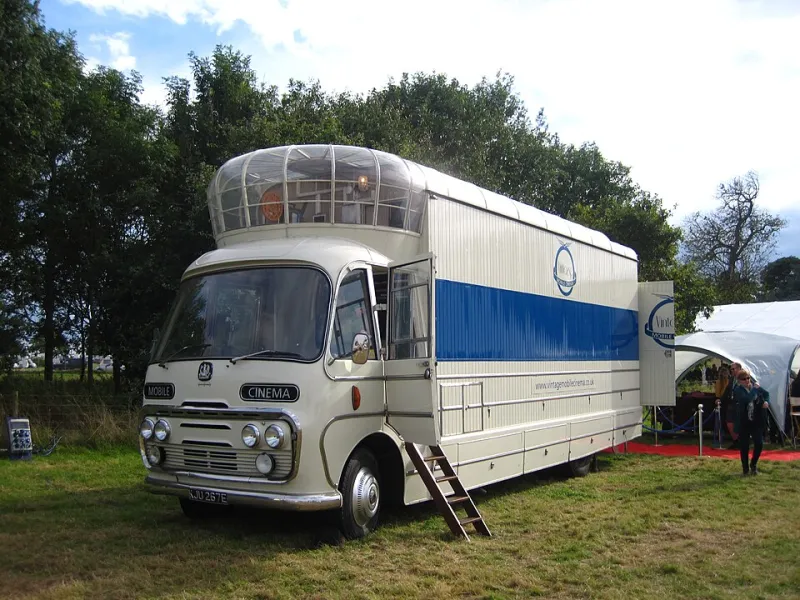
Photo: Chris Holifield , CC BY-SA 2.0, via Wikimedia Commons
There's a particular kind of satisfaction that comes from arriving somewhere slightly knackered, slightly lost, and absolutely certain you're in the right place. A pub with the lights on. A community hall with a handwritten sign. A converted church with a projector beam cutting through the dark. That's what proper film tourism feels like — and Britain is absolutely riddled with it, if you know where to look.
This isn't a list of the obvious ones. You already know about the Everyman in Cheltenham or the Watershed in Bristol. What we're after here are the places that reward a detour. The picture houses that don't turn up on Google's first page. The venues that programmers speak about in reverent, almost conspiratorial tones.
So charge your phone, pack something warm, and let's get moving.
The North Yorkshire Loop: Pickering, Whitby, and a Proper Picture House in Between
Start in Pickering, where the Palace Cinema has been running more or less continuously since 1913. It seats just over 200 people, still has an intermission, and the programming skews towards the kind of thing you'd have to wait three months to catch on streaming. The town itself is the southern terminus of the North Yorkshire Moors Railway, which means you can arrive by steam train if you're really committing to the bit.
From there, the moors road to Whitby is one of the finest drives in England — genuinely atmospheric in the way that only moorland can be, particularly if you're heading to a horror double bill. Whitby's own Coliseum is a smaller, scrappier affair, but it punches well above its weight on cult programming. The team there have a particular fondness for 35mm screenings of films that technically shouldn't still exist on 35mm.
"We get people coming from Leeds, from York, sometimes from further south," one of the programmers told us when we visited last autumn. "They're not just coming to watch a film. They're making a day of it. That changes everything about how an audience sits together in a room."
Stay overnight in Whitby — obviously — and you've got yourself a proper away day.
The South West Swing: Cornwall's Unlikely Cinema Trail
Cornwall has a density of independent cinemas that seems almost implausible given the population. The Regal in Redruth is the one that tends to stop people mid-scroll when they encounter it online: a restored Art Deco building with a single screen, a bar that takes its job seriously, and a programming policy that actively avoids anything you'd describe as 'safe.'
Combine it with a visit to the Merlin Cinema in Penzance — arguably the furthest west you can go in England and still find a dedicated arthouse screen — and you've got a route that doubles as a tour of some genuinely beautiful Cornish towns that aren't St Ives.
The drive between them along the A30 is unremarkable, but peel off onto the B roads and you're into another world entirely. Former mining country, tin-roofed chapels, the kind of landscape that makes you understand why so many films set here have a slightly surreal quality.
Programmer Jess Trewin, who has been involved with Penzance screenings for several years, puts it plainly: "Distance is actually an asset. When someone's made the effort to get here, they're already invested. They want the film to be good. They're rooting for it."
Mid-Wales and the Marches: Slower Roads, Better Conversations
This one requires a genuine commitment to getting off the motorway. The Market Hall Cinema in Brynmawr and the Hafod Cinema in Aberystwyth anchor a route through some of the least-visited but most visually extraordinary parts of Wales. The roads are slow, the villages are quiet, and the cinemas themselves feel genuinely embedded in their communities in a way that's increasingly rare.
Aberystwyth is a university town with a film culture that punches well above its size — the Aberystwyth Arts Centre runs a programme that would hold its own in any major city, with a particular strength in Welsh-language cinema and international documentary. The drive there along the Cambrian coast is the kind of thing you'll tell people about for years.
What to Pack, Where to Stay, and Why It Matters
Practically speaking: most of these venues have limited parking, unpredictable mobile signal, and bar facilities that close promptly. Bring cash. Book accommodation in advance if you're going during summer or festival season. And check screening times carefully — many of these places run single-screen programmes with limited showings per week.
But here's the thing about making the journey: it recalibrates your relationship with the film. When you've driven two hours through the Dales or crawled along a Cornish B road in the dark, you're not just a passive consumer anymore. You're a participant. The cinema becomes part of the story you're telling about the day.
That's what away days are for. That's what these places are for.
The multiplex will always be there. These won't — not unless people keep showing up. So show up.