Pint, Pickle and a Pee Break: The Interval Is Quietly Winning Back British Screens
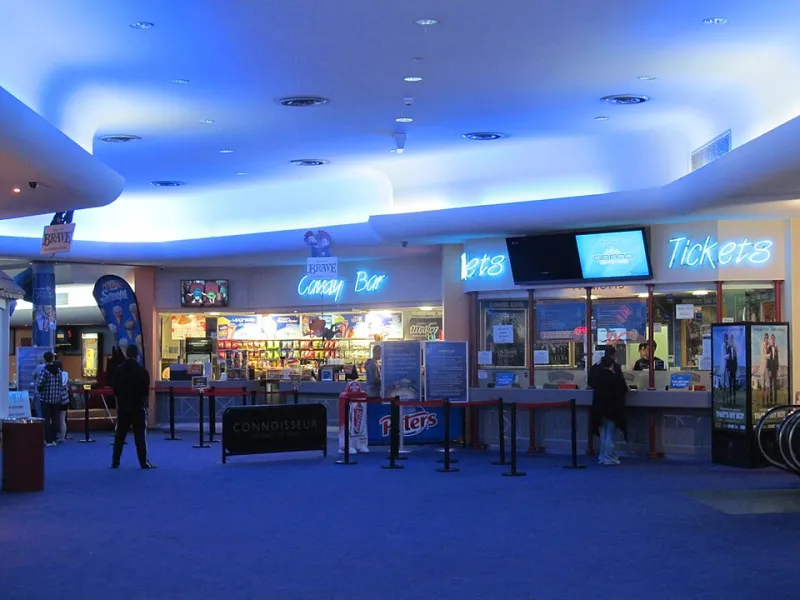
Photo: User:Orderinchaos, CC BY-SA 3.0, via Wikimedia Commons
Watch a three-and-a-half-hour film in a British cinema in 2026 and something odd happens around the two-hour mark. The lights come up. The house lights, at a public screening, in the middle of the film. Somebody appears at the front and says there's twenty minutes, and the bar is open, and could the gentleman in row F please note that his car is being clamped.
It's a shock the first time. It shouldn't be. For the first fifty years of cinema-going, the interval was simply how films were shown. Then we got twelve-screen multiplexes with rigid turnaround times and a nacho concession instead of a usherette, and the break vanished almost entirely.
It's coming back. Not everywhere, and not as a rule — as a decision, taken case by case, by programmers who have worked out that stopping a film for a bit can be the most popular thing they do all week.
A short history of the choc ice
In the days of single-screen cinemas and changeover projection, the interval was a mechanical certainty. Two projectors, one operator, a reel ending, a break of ten minutes while the next reel laced up — and while somebody walked the aisles with a tray. You can date a British childhood by whether you remember the Kia-Ora ad and the Pearl & Dean sting happening at the interval rather than before the film.
Multiplexes made the break obsolete, and then made it actively unwelcome. Twelve screens mean twelve start times, and a start time that slips by twenty minutes is a start time you can't sell. So the interval died, and with it went the second round, the mid-film argument and the ritual of asking a stranger to save your seat.
The bladder defence
Let's be practical first, because this is the reason most cinemas give and it's not dishonest. Films are getting longer and audiences are travelling further to see them. If you've driven ninety minutes to watch Lawrence of Arabia in 70mm, you are not going to skip it to visit a toilet in a service station. You're going to either miss four minutes of the film or be uncomfortable for an hour. Neither is hospitality.
Roadshow presentations brought the interval back into the mainstream conversation — the 70mm event screenings, the epic retrospectives, the long-form premieres that arrive with a built-in break because the distributor decided the film wants one. Any film north of three hours now comes with a joke about bladders in the marketing copy, and the joke exists because it's true.
The bar-till defence
Here's the one programmers mention second and mean first. An interval sells drinks. A well-run interval can double the take at the bar over a screening's lifetime, and a doubled bar take is the difference between a midweek rep screening that breaks even and one that doesn't happen again.
'Sixteen minutes of interval paid for the projectionist's shift,' says the manager of an independent cinema in the East Midlands. 'I can't put that in the programme notes, but that's the maths. It's not a nostalgic flourish. It's how we keep the lights on.'
This is also where the interval gets its reputation for being commercial rather than cultural, and where the honest answer is: both, obviously. Cinema has always sold you something at the halfway point. The question is whether it sells it well.
The community defence
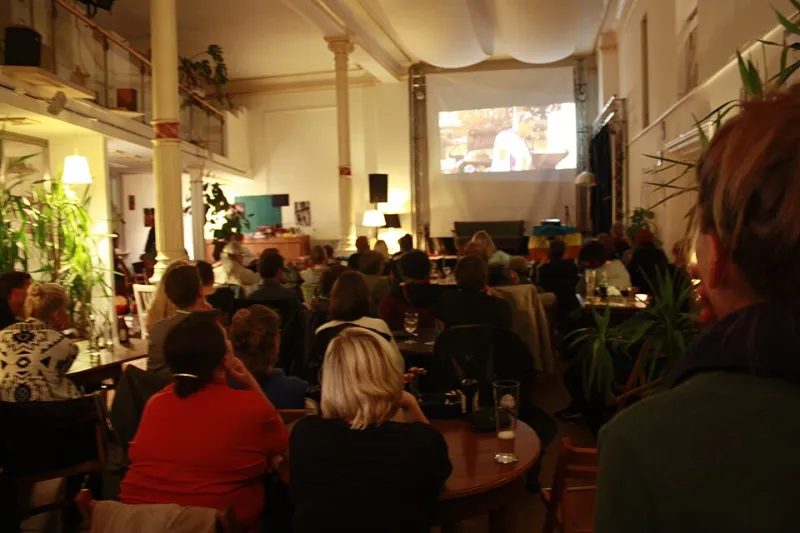
And yet. The best intervals we've sat through have had nothing to do with either bladders or bar tabs. Twenty minutes turns a room of strangers into a room. You find out what the person next to you thought of the first half. You discover that the man in the anorak has seen the film nine times and can tell you where the print came from. Somebody's mum is on the phone in the foyer. Somebody else is arguing about the subtitles.
The conversation after a film is often about leaving. The conversation in an interval is about the film you're still inside. That's a different and better thing.
The resistance defence
There's a small politics to this too, if you want it. The multiplex model is a throughput model: get them in, get them seated, get them out, up-sell the snacks, don't let the schedule slip. The interval says the opposite. It says this film is an event with a middle. It says we're not in that much of a hurry. It says twenty minutes of your evening is not a rounding error to be engineered away.
It's the same instinct that has British indie cinemas leaning into double bills, 16mm, hand-printed programmes and seasons built around a single obsession. Slowing the machinery down, deliberately, in a way that costs money.
How to run one properly
Some practical notes, gleaned from the venues that get it right.
Say it at the start. Announce the interval before the film begins, state the length, and put a countdown clock on the screen. The single most common interval complaint is not 'there was a break' — it's 'nobody told me'.
Fourteen to twenty minutes. Shorter and the bar queue eats it. Much longer and the room cools off and someone starts looking at their phone.
Don't cut a scene in half. Break where the film breathes, not on a cliffhanger, unless you're deliberately making a two-part evening of it and have told everyone.
Sell ahead. Wristbands, pre-orders, a table in the foyer. Nothing kills goodwill like a twenty-minute wait for a warm lager.
Give the break a job. A short film, a reel of local trailers, a bit of archive, a quiz, a guest. An interval with a programme in it is an interval nobody resents.
Where to find one
Repertory epics and 70mm roadshows almost always have one. All-nighters run on them — the 3am interval is, by common consent, the best part of the evening and the closest British cinema gets to a festival. Film societies build them in routinely, partly because village halls have kettles. And a growing number of event nights now programme around a half-time pint on purpose, with the film split into two acts and the second half starting when the bell goes.
The interval isn't a nostalgia project and it isn't a gimmick. It's a stubborn little piece of good manners — and in a year when we're all being asked to consume faster, it's one of the few bits of the old cinema that's worth fighting to keep.