Paper Trails and Faded Type: The Indie Cinemas Quietly Hoarding Britain's Lost Film Criticism
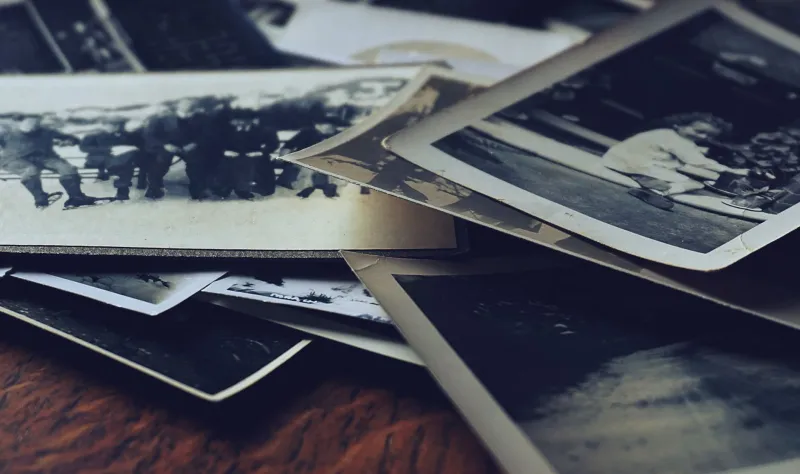
There's a filing cabinet in the back office of a much-loved regional cinema — the kind of place with mismatched seats and a coffee machine that's been threatening to pack in since 2014 — that contains something genuinely irreplaceable. Stacked in rough chronological order, held together with elastic bands gone brittle with age, are forty-odd years of monthly programmes. Every screening listed. Every curatorial note typed, then later printed, then eventually formatted with clip art that dates them more precisely than any carbon test could manage.
Nobody set out to build an archive. It just happened, the way these things do — through a reluctance to throw anything away, a collective sense that it might come in useful, and the particular hoarding instinct that seems to come as standard with anyone who has ever run a cinema on passion and a shoestring.
Across Britain, this story is playing out in dozens of variations. Independent cinemas, film societies and arts centres have been quietly accumulating decades of printed ephemera without anyone really stopping to consider what they've got. Now, a small but growing number of people are paying attention — and what they're finding matters far more than the musty smell might suggest.
More Than a What's On Guide
It's easy to dismiss the printed cinema programme as a purely functional object. Dates, times, ticket prices. A paragraph about the film. Maybe a still image if the budget stretched. But spend an afternoon with a collection of them — say, the archive held by the Showroom Workstation in Sheffield, or the considerable stash maintained by the Glasgow Film Theatre — and something else starts to emerge.
These documents are a record of taste. Of argument. Of the specific, opinionated, sometimes gloriously wrongheaded way that British cinema culture has processed the films it chose to show. The curatorial notes written by programmers in the 1980s don't read like press releases. They read like someone trying to convince you that this obscure Polish drama or that barely-distributed American independent is genuinely worth your Tuesday evening. They're acts of persuasion. Little manifestos, printed in two columns on recycled paper.
Read enough of them in sequence and you start to see patterns. The films that got championed. The directors who were written about with barely concealed reverence before anyone else was paying attention. The moments where the critical language shifts — where 'women's cinema' becomes a category of celebration rather than apology, where world cinema stops being treated as exotic and starts being treated as simply cinema.
What the Ephemera Actually Reveals
The Phoenix Cinema in East Finchley has one of the more extensive collections of this kind of material in London — not surprising, given it's been operating continuously since 1912 and has spent much of that time under various forms of independent or community ownership. Their archive spans formats from hand-typed sheets to glossy folded brochures, and tracking the evolution across decades tells you something about how the relationship between cinema and its audience has changed.
Earlier programmes assume a certain kind of cinephile — someone who needs context, who is being introduced to films they couldn't have encountered elsewhere, who might need convincing that subtitles aren't an obstacle. Later ones shift register, writing for an audience that increasingly knows its Tarkovsky from its Tarr, that doesn't need the foreign language explained away. The critical confidence in the writing grows. The apologetic framing disappears.
Elsewhere, the Watershed in Bristol has been more deliberate about preservation, maintaining an organised archive that's been partially digitised. What that material shows is how the politics of programming — who gets shown, whose stories get prioritised — has evolved in ways that feel both gradual and, in retrospect, seismic. There are gaps in the record that are themselves informative: periods where certain kinds of film barely appear, followed by sudden corrections, expansions, reckonings.
The People Doing the Preserving
For the most part, this work is happening informally, driven by individuals rather than institutions. A programmer who's been at the same cinema for twenty years and simply never got around to clearing out the storage room. A volunteer archivist who started cataloguing old programmes during lockdown and hasn't stopped. A retired projectionist who kept copies of everything, just because.
The British Film Institute has shown some interest in this material, and there are ongoing conversations about what a more systematic approach to preserving cinema ephemera might look like. But formal institutional support remains patchy. Most of what exists survives through individual stubbornness rather than any coordinated effort.
This is both the charm and the fragility of it. The charm because these accidental archives feel genuinely human — accumulated rather than curated, complete with the gaps and idiosyncrasies that reflect real organisations run by real people. The fragility because all it takes is a building move, a clear-out, a change of management with different priorities, and decades of material disappears.
Some of it already has. Former cinemas that closed without anyone thinking to save their records. Programmes binned when a venue changed hands. Entire runs of material lost to damp, or fire, or simple indifference. Every lost archive is a gap in the record of how Britain has thought about film.
Why Any of This Matters
There's a version of this story that treats it as pure nostalgia — a nice bit of colour about dusty old papers that only the most committed cinephile would care about. That version is wrong.
Film criticism, in its printed form, is vanishing. The publications that once sustained long-form critical writing have contracted or disappeared entirely. What survives online is often ephemeral in a different way — present one moment, broken link the next, platform-dependent and precarious. The printed programme, for all its limitations, was a physical object. It persisted.
What these cinema archives contain, therefore, is something close to a primary source record of British film culture — not the official version, not the metropolitan critical consensus, but the actual thinking of the people who were out there in the regions, in the arts centres, in the converted churches and former ballrooms, making the case for cinema that wouldn't otherwise have been seen. That's a different kind of film history, and it's one that deserves to be taken seriously.
The away-day impulse — the willingness to travel for something worth experiencing — applies here too. Some of these archives are accessible, if you ask nicely. Others are waiting for someone to ask. Either way, they're out there, and they're telling a story about British cinema culture that hasn't properly been heard yet.
Get yourself to a cinema with a good storeroom. Ask what's in the filing cabinet. You might be surprised what you find.