Glorious Wreckage: Why We Keep Coming Back to Cinema's Magnificent Failures

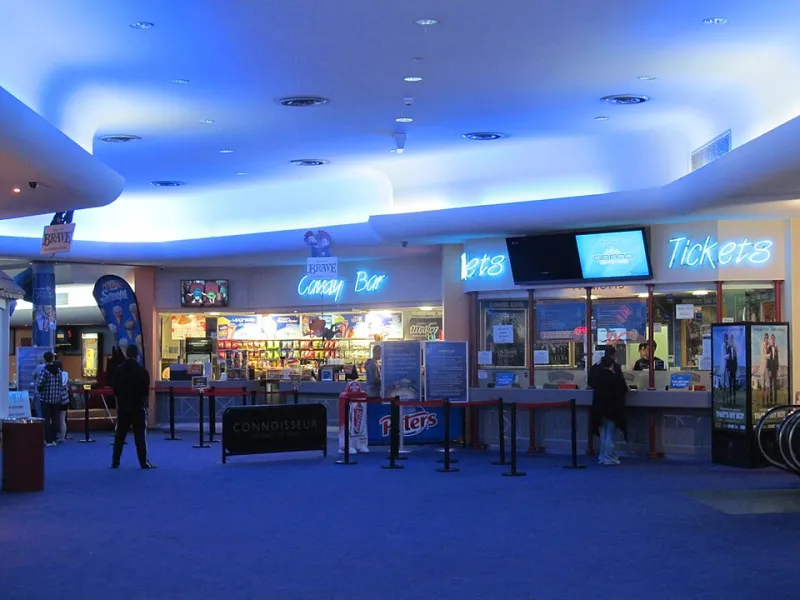
Photo: Dale Cruse - 10M views from San Francisco, CA, USA, CC BY 4.0, via Wikimedia Commons
The screening was a Thursday, upstairs in a room with a bad ceiling and good sound. The film was Julien Temple's Absolute Beginners, a £8m musical adaptation of Colin MacInnes's novel that arrived in 1986 to reviews so hostile they've since become part of the furniture. The house was full. Not curious-full. Properly full — a queue down the stairs, people turned away.
Nobody in that room expected a good film. That was the ticket. That was the entire point.
There is a difference between a bad film and a beautiful one
Let's be precise, because this argument usually collapses into 'so bad it's good', which is a lazy phrase covering at least four different pleasures.
A dull flop is a film made by committee that has simply failed to land — competent, focus-grouped, empty, the sort of thing that plays four weeks in a multiplex and evaporates. Nobody wants to watch that with three hundred strangers and a pint. There's nothing to look at.
A beautiful flop is a film that aimed absurdly high and missed in public. You can see the ambition in the wreckage. Absolute Beginners is a case in point: a tracking shot that cost more than most British films of the decade, a Pye Records advert come to life, designers and choreographers and a cast all operating at a pitch of sincerity that the finished object absolutely cannot support. It fails. It fails gorgeously. You can watch the money and the yearning go up in flames together, frame by frame, and there is something genuinely moving about that.
Same with Ken Russell. Lisztomania is not a good film in any sense a reasonable person would defend, and yet it is one of the most alive things ever committed to 35mm — a film that decided the correct response to a composer's biography was a giant phallic prop and a Rick Wakeman soundtrack, and then did it. The Boy Friend is a busby Berkeley homage made by a man who had clearly never been told no by anyone. Nobody involved was hedging.
The dullness test
So here is the rough test we use. Ask three questions.
Does the failure come from overreach, or from under-ambition? If you can feel the film reaching for something it can't quite hold, keep watching. If you can feel it settling for something it can easily hold, turn it off.
Is the film sincere? The Apple, Zardoz, Sex Lives of the Potato Men, Michael Caine's mortgage-paying years — all of them were made by people who believed, at least at the start, that this was going to work. That belief is what you're watching. Cynical product is unwatchable; deluded passion is endlessly rewatchable.
Is there at least one image you can't explain? A beautiful flop will always give you one shot that makes you sit forward and ask, out loud, in a room, what on earth was happening there. That's the bit the audience takes home.
Failure as a shared ritual
Here's what the streaming age can't replicate, and why programmes like this keep selling out indie screens from Bristol to Glasgow: a flop needs a room.
The pleasure is collective and it's layered. Half the audience is watching the film. The other half is watching the audience watching the film. There's the laugh that isn't quite cruelty — the recognition laugh, the 'oh no, they're going to do it' laugh, the one that arrives three seconds before the disaster because everybody who's seen it before knows exactly what's coming. Then there's the silence afterwards, which is often the most respectful silence in cinema. Nobody claps a masterpiece quite like that.
You cannot get this alone on a laptop in a Tuesday. It requires other people, and it requires a screen big enough to be humiliating.
How you programme a disaster
Badly, usually. The temptation is to introduce the film with a smirk, and that kills it stone dead. If you tell an audience the thing they're about to watch is a joke, they'll laugh at it rather than with it, and the whole transaction collapses into snark.
'You have to give the film its dignity,' says a programmer at a repertory cinema in the North East who has built three seasons out of this stuff. 'You explain the stakes, you tell them what it cost, you tell them who said yes. Then you get out of the way. The film does the rest.'
The best hosts do their homework: what the budget was, what got cut, which careers it ended, what the director said in 1987 and never said again. Context makes a flop legible, and legible flops are devastating.
And you show it properly. A scratched 16mm print that has been round the country twice is better than a flawless upscale, because the damage is part of the evidence.
In defence of the overreach
Cinema is a machine for ambition. Every so often somebody loads it with more money than sense, more sense than restraint, and more restraint than is really healthy, and fires it straight at a wall. What comes out is not always good. It is very often unforgettable.
That's the case for the flop, and it isn't a soft one. British audiences aren't rescuing these films out of pity. We're keeping them because they're the receipts — proof that somebody once tried something ridiculous and let us watch it fail in the largest possible format.
Keep programming them. Buy a ticket. Bring a friend who's never seen it. Just don't laugh too early.